TL;DR
Data centre overhead containment works in tiers. Each tier carries a different cable family, at a different load class, with a different product geometry:
| Tier | Product | Width | Class / rating | What it carries |
|---|---|---|---|---|
| Top | Cable ladder (SLW/SLU) | 600 mm | NEMA Class 8C · 1,340 kg/span | Redundant 3-phase power from PDU |
| Middle | Perforated cable tray (TRC/TRU) | 300 mm | NEMA Class 8B · 420 kg/span | Branch-circuit LV + rack power taps |
| Bottom | Cable trunking (TKC/TKU) | 100 mm | Enclosed, Jotun white | Cat 6A, fibre, BMS/DCIM control |
| Separate vertical | Trunking (TKU) | — | Enclosed, red | Fire alarm + emergency power (life-safety) |
Total vertical containment above the rack: ~450–600 mm. Each tier is independently supported, independently accessible, and independently replaceable — which is exactly how a data centre operator wants it.
Below: how to specify each tier, why the layering matters, and where finish selection gets specific to data centre environments.
Power distribution tier — cable ladder
The top tier handles the heaviest cables in the facility: redundant 3-phase feeders running from the power distribution unit (PDU) to each rack row. These are large-diameter, high-mass copper or aluminium conductors, and the containment needs to carry them without deflection over long, repeating spans.
Metosu’s cable ladder line — SLW (perforated side rail) and SLU (non-perforated) — is the right product category here:
- Load capacity: 1,340 kg/span, independently tested by Sucofindo (report E26929/FNBPAS, 14 July 2025) to NEMA VE 1-2017 — well above the NEMA Class 8C requirement.
- Deflection: L/250 = 9.6 mm at the standard 2,400 mm support span. Under typical data centre power loads the ladder stays within elastic limits with margin.
- Widths: 75–1,200 mm. Data centre power runs typically spec 600 mm to accommodate dual-feed layouts with separation between A-feed and B-feed conductors.
- Steel: 1.2–3.0 mm hot-dip galvanised.
The open rung geometry matters for thermal performance. Power cables derate in enclosed environments — an open ladder with 300 mm rung spacing gives natural convection room to work, which keeps conductor temperatures within rated limits without oversizing.
Support spacing in data centres is typically 2,400 mm (matching the NEMA test span), though some operators specify 1,800 mm for seismic zones or unusually heavy fills. At 2,400 mm, the ladder’s tested capacity is well above any realistic cable fill.
Data and comms tier — cable tray
The middle tier carries branch-circuit LV distribution, rack-level power taps, and in some configurations, structured data cabling. Cable diameters are smaller, loads are lighter, and the key requirement shifts from raw load capacity to cable management density.
Metosu’s perforated cable tray — TRC — is the standard selection:
- Load capacity: 420 kg/span, NEMA Class 8B (Sucofindo report E26933/FNBPAS, 14 July 2025). More than adequate for the LV and data cable mass at this tier.
- Widths: 100–900 mm. Data centre branch circuits typically spec 300 mm — wide enough for a structured fill, narrow enough to keep the vertical stack compact.
- Steel: 1.0–3.0 mm.
- Perforation: the ventilated base is functionally important. Parallel Cat 6A runs generate enough mutual heating to require derating in an enclosed channel. Perforated tray avoids this.
For facilities running high-density structured cabling (40+ cables per tray section), specify the perforated variant (TRC) over solid (TRU). The airflow through the base is the difference between a comfortable thermal margin and having to upsize cable gauge to compensate for derating.
Life-safety segregation — trunking
IEC 60364-5-52 requires physical separation between safety circuits and general power/data circuits. In a data centre, “safety circuits” means fire alarm loops, emergency lighting feeds, and emergency power conductors — anything that must remain operational during and after a fire event.
These circuits run in their own dedicated containment: Metosu cable trunking, TKC or TKU, colour-coded red, on a separate vertical route from the main overhead tiers.
- Widths: 100–1000 mm. Life-safety runs in a data centre are typically light — 100 mm trunking is standard.
- Steel: 1.0–2.5 mm.
- Enclosure: the four-sided construction with a removable cover provides the mechanical protection that life-safety circuits need. Cables are shielded from incidental damage, falling debris, and contact with other circuit families.
The red finish is not decorative — it is a maintenance identification convention that lets facility teams trace life-safety routes at a glance, even in dense overhead environments.
The bottom tier of the main stack also uses trunking (typically in Jotun white) for structured data cabling: Cat 6A, multimode fibre, and BMS/DCIM control loops. The enclosure keeps these small-diameter cables organised and physically separated from the power tiers above.
Finish selection for data centre environments
Data centres are indoor, climate-controlled, and relatively benign from a corrosion perspective. But the specification still matters:
Hot-dip galvanised (HDG) is the default for the power tier (ladder) and branch-circuit tier (tray). HDG to ISO 1461 provides long-term corrosion protection even if the climate system is temporarily offline during construction or commissioning — which happens on every project.
Jotun powder coat is specified for visible tiers and colour-coded trunking. In the layered configuration described above:
- Life-safety trunking: RAL 3000 red (or per the facility’s life-safety colour code)
- Data/comms trunking: RAL 9003 signal white (clean, high-visibility, consistent with structured cabling conventions)
- Ladder and tray: HDG (no powder coat needed — these tiers are above sightline and optimised for structural performance, not appearance)
Powder coat is applied over a galvanised substrate at 60–80 µm dry film thickness. The galvanised base provides corrosion protection; the powder coat provides colour identification and a finished surface.
Support spacing and vertical clearance
Standard support spacing for all tiers: 2,400 mm. This matches the NEMA VE 1 test span and aligns with typical data centre structural grids (which are modular at 600 mm increments).
Each tier needs its own independent support — trapeze hangers, threaded rod, or bracket to the building structure. The tiers should not be stacked directly on each other; the vertical separation between tiers serves three purposes:
- Thermal isolation — heat from the power tier dissipates before reaching the data tier.
- Access — each tier can be opened, modified, or expanded without disturbing the tier above or below.
- Segregation compliance — IEC 60364-5-52 requires maintained separation, not just initial installation separation.
Typical vertical clearance between tiers: 100–150 mm. Combined with the tray/ladder depth, total vertical containment above the rack is ~450–600 mm — a number that must be coordinated with the ceiling/plenum design early in the project.
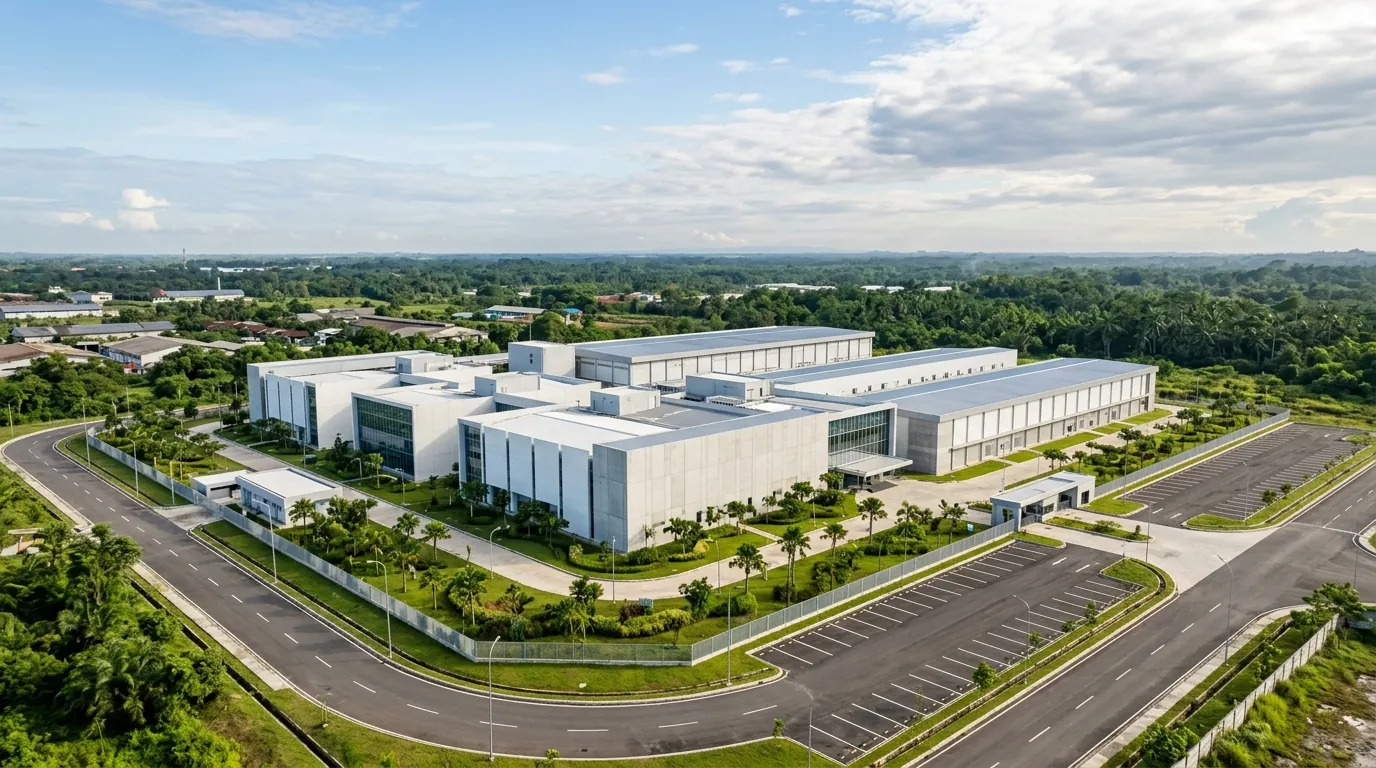
Specifying for Indonesian hyperscale and colocation builds
Indonesian data centre construction has specific characteristics that affect cable management specification:
- Seismic zones: most of Java and Sumatra require seismic bracing on overhead containment. Metosu’s standard bracket and trapeze accessories are designed for Indonesian seismic loading.
- Humidity during construction: even with climate control in operation, the construction phase exposes containment to tropical humidity. HDG finish on structural tiers handles this without degradation.
- Import vs local: Metosu manufactures in Tangerang. Local production means lead times are measured in weeks, not months — and the documentation (Sucofindo test reports, material certificates, NEMA/IEC compliance declarations) ships with the product, not as a separate import clearance exercise.
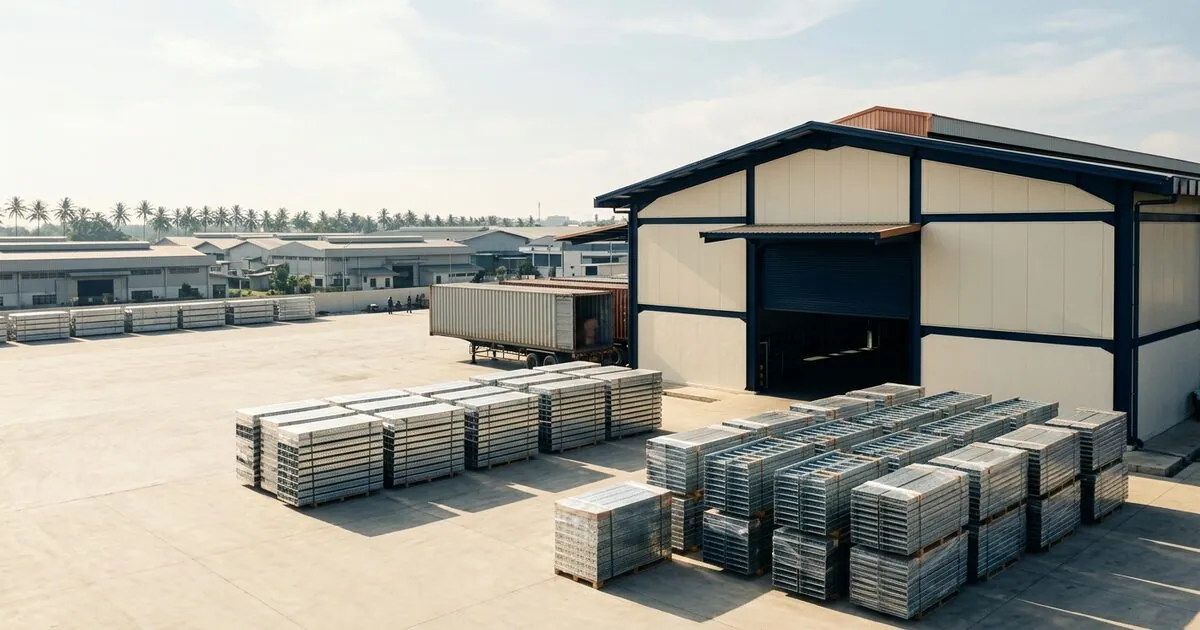
- Scale: hyperscale facilities can require kilometres of containment per building. Metosu’s standard lengths (2,400/3,000/6,000 mm for ladder, 2,400/3,000 mm for tray) and bundled shipping reduce handling and waste on high-volume installs.
Engineering review
Metosu’s engineering team reviews data centre cable management specifications as a pre-sales service. For a specification review, send:
- The electrical single-line diagram
- Cable schedule with conductor sizes and quantities per route
- Typical section drawing showing available vertical clearance
We will recommend the tier configuration, product selection, finish, and support spacing — typically within one business day.
Email marketing@metosu.com or WhatsApp +62 816 689 689.
Further reading
- Data centres industry page
- Cable ladder · Cable tray · Cable trunking
- Catalogue (EN) · Catalogue (ID)
- IEC 60364-5-52 — life-safety segregation standard cited above
- NEMA VE 1-2017 — cable tray load classification standard